The Complete Guide to Perfume
Most guides to perfume are written by people who have never sat with a customer at a market stall on a cold Saturday, watched their face change when a scent lands, and then watched them come back the next week with a friend. We have. This guide is the version we wish existed when we started — accurate, complete, and free of the usual mystique that gets in the way of actually enjoying fragrance.
Perfume is simpler than the luxury industry likes to pretend, and more interesting than most shops bother to explain. By the end of this guide you’ll understand what’s actually in a bottle, why two people can wear the same scent and smell different, how to read a fragrance before you buy it, and how to make a good perfume last. We’ll link out to deeper guides on each topic as we go, so treat this as the map and follow the roads that interest you.
Contents
What is perfume?
Perfume is a blend of aromatic ingredients — natural and synthetic — dissolved in a carrier, usually alcohol or an oil. That’s the whole of it. The aromatic materials give the scent; the carrier spreads it, lifts it off the skin and controls how quickly it releases. Change the ratio of aromatics to carrier and you change the strength, the longevity and, to a large degree, the price.
The word covers a wide family of products. A splashy eau de cologne and a thick, syrupy extrait are both “perfume,” but they behave completely differently on the skin. So do the two great traditions this guide draws on: the Western, alcohol-based spray you’ll know from department stores, and the Arabian tradition of concentrated perfume oils and attars applied a drop at a time. Neither is better; they’re built for different things, and understanding both makes you a far more confident buyer.
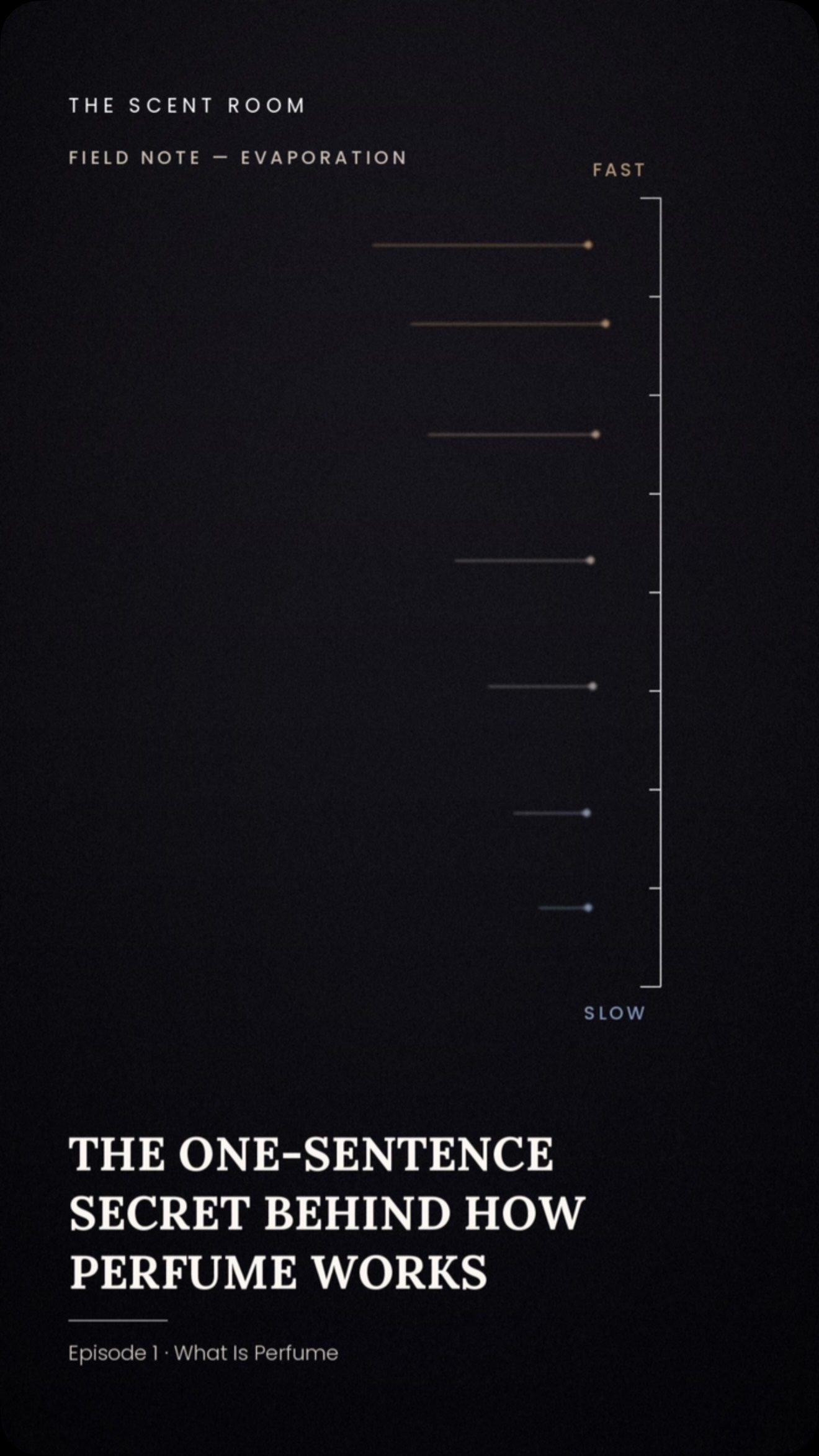
One idea underpins everything else: perfume is not static. It moves. From the second it hits warm skin it begins to evaporate and transform, revealing different materials over minutes and hours. Learning to expect that arc is the single biggest step from “I just buy what smells nice in the shop” to actually choosing well.
How perfume is made
A perfume begins with raw materials. Natural ingredients are extracted from botanicals — flowers, woods, resins, citrus peels, spices — by methods such as steam distillation, expression (literally pressing the oil out, as with citrus) and solvent extraction. Synthetic materials, made in a lab, aren’t a cheat: many are indispensable, more stable and more ethical than their natural counterparts, and some scents simply cannot be captured any other way.
A perfumer — sometimes called a “nose” — composes these materials into an accord, a blend that reads as a single smell rather than its separate parts, much as chords in music are heard as one sound. A finished fragrance can contain dozens or hundreds of materials balanced by weight to a formula. The concentrate is then diluted in the carrier, and here’s a step most guides skip: the blend is left to rest, or macerate, for days or weeks so the materials marry and mellow. A rushed perfume smells sharp and disjointed; a rested one smells whole.
We build our own blends in layers — top, heart and base, in that order, on purpose — and we let them sit. It’s slower and it’s the reason a scent still smells right by mid-afternoon. If you want the full process, see our guide to
A very short history of perfume
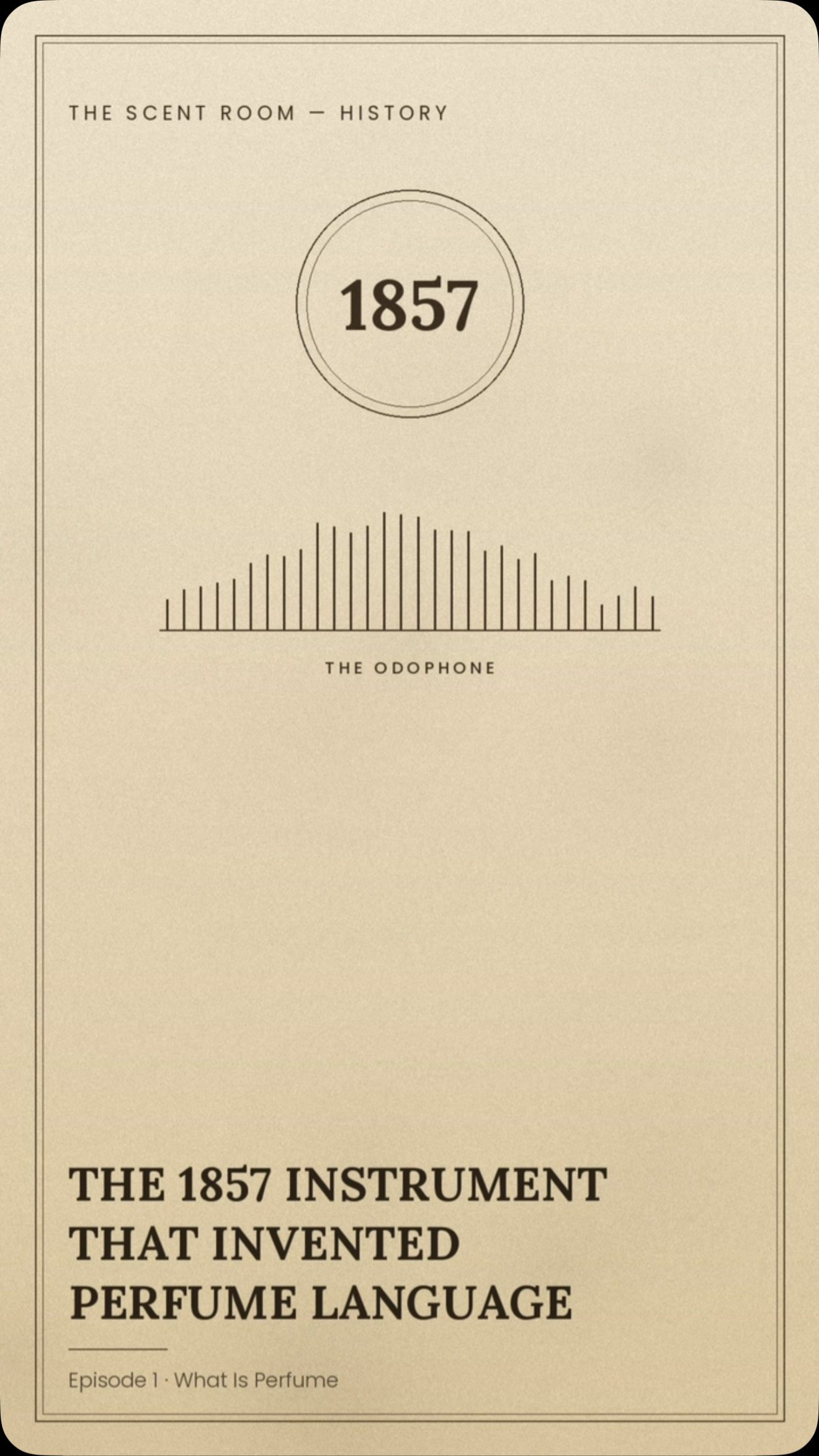
Perfume is ancient. The Egyptians burned fragrant resins and made scented oils for ritual and daily life; the very word “perfume” comes from the Latin per fumum, “through smoke.” Fragrance flourished across the Islamic world during its golden age, where scholars refined distillation and where oud, musk, rose and amber became cultural touchstones — a heritage that still runs directly through Arabian perfumery today. Modern Western perfumery took shape in Europe from the nineteenth century, and the arrival of synthetic materials opened up scents that nature alone couldn’t provide.
We tell this story not for trivia but because it explains the two traditions you’re choosing between. When you dab a concentrated oil on your wrist, you’re doing something people have done for well over a thousand years. When you spray an eau de parfum, you’re using a comparatively modern invention. Both are in this guide.
Fragrance families: the eight big neighbourhoods
A fragrance family is simply a group of scents that share a character. Families are the fastest way to work out what you like, because once you know your neighbourhood you can explore it instead of sniffing at random. We organise our own collection around eight, and most of the fragrance world maps onto them:
- Oud — deep, resinous agarwood; the signature of Arabian perfumery and a family of its own here.
- Woody & Earthy — sandalwood, cedar, vetiver; dry, grounded, elegant.
- Amber & Resin — warm, golden, slightly sweet; frankincense, labdanum, benzoin.
- Floral — rose, jasmine, neroli; from soft and powdery to loud and heady.
- Musk — clean, skin-like, soft; the scent that reads as “you, but better.”
- Sweet & Gourmand — vanilla, caramel, cherry; edible, comforting, moreish.
- Citrus & Fresh — bergamot, lemon, neroli; bright, cool, uplifting.
- Spicy & Warm — saffron, cardamom, cinnamon, pepper; rich and characterful.
Most perfumes sit mainly in one family and borrow from a couple of others — an oud with a sweet heart, a floral with a musky base. Knowing the families turns a review’s note list into something you can actually picture.
Perfume notes: top, heart and base
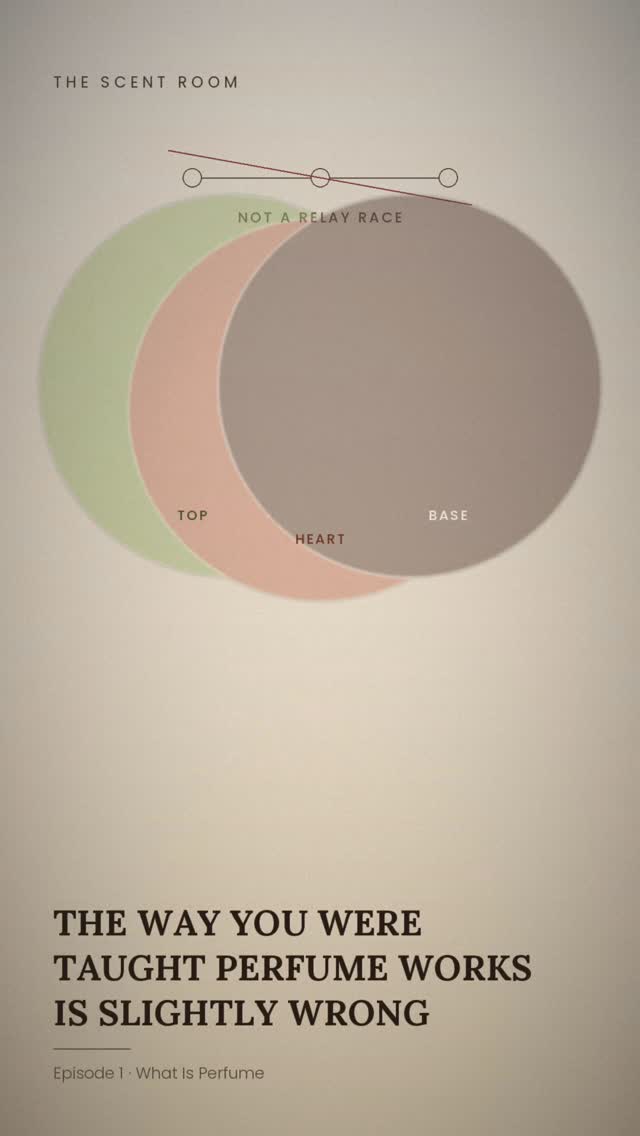
If families are the neighbourhood, notes are the individual voices in the room — and they don’t all speak at once. Perfumers arrange notes into a pyramid of three stages that unfold over time:
Top notes
The opening: what you smell in the first few minutes. Usually light, volatile materials — citrus, herbs, light spices — that make a bright first impression and then evaporate. The top note is a hello, not the whole conversation, which is exactly why you should never judge a perfume in the first sixty seconds.
Heart notes
The middle: what emerges as the top fades, over roughly the next hour. This is the true character of the fragrance — florals, fruits, warm spices. When people say a perfume “is” a rose or a saffron scent, they usually mean its heart.
Base notes
The foundation: the heavy, long-lasting materials that anchor everything and linger for hours — oud, musk, amber, vanilla, sandalwood. Base notes give a perfume its depth and its staying power, and they’re the reason oil-based Arabian perfumes, which lean hard on rich bases, last so long.
Reading a fragrance pyramid is a genuine skill and worth learning; it lets you predict how a scent will behave before you commit.
Perfume concentrations: parfum, EDP, EDT and oils
Concentration is the percentage of aromatic oil in the blend — the rest is mostly carrier. It’s the number that quietly decides how strong a perfume is, how long it lasts and much of what it costs. These ranges are industry norms rather than fixed laws, but they’re a reliable guide:
| Type | Typical oil % | Character & longevity |
|---|---|---|
| Extrait / Parfum | 20–30% | Richest and longest-lasting; often 6–8+ hours. Wear close to the skin. |
| Eau de Parfum (EDP) | 15–20% | The everyday sweet spot: full, lasting, versatile. |
| Eau de Toilette (EDT) | 5–15% | Lighter and fresher; great for daytime and heat, but shorter-lived. |
| Eau de Cologne | 2–5% | Bright, splashy, brief; a refresher rather than a statement. |
| Perfume oil / Attar | commonly 15–30%+ | Alcohol-free, applied by the drop; wears close and lasts a long time. |
A note from our own bench: our perfume oils sit at around 25% fragrance oil, at the strong end of “premium.” That isn’t a marketing number — it’s the difference between a scent that’s still with you at dinner and one that quietly left at lunch. Higher concentration doesn’t automatically mean “better,” but it does mean richer and longer, and for Arabian-style scents built on heavy bases it’s the point.
The ingredients that matter
You don’t need a chemistry degree, but a handful of ingredients come up again and again, and recognising them makes every fragrance description clearer:
- Oud (agarwood) — the crown jewel of Arabian perfumery: deep, woody, complex. Worth a guide of its own, which you’ll find below.
- Rose — the backbone of countless perfumes; the prized Taif rose from Arabia is famously rich.
- Musk — soft, clean and skin-like; today almost always a synthetic “white musk,” for good ethical reasons.
- Amber — not a single raw material but a warm, resinous accord, usually built from labdanum, benzoin and vanilla.
- Saffron — a leathery, slightly sweet spice that pairs beautifully with oud and rose.
- Vanilla, sandalwood, bergamot — the dependable base, wood and top-note workhorses behind a huge share of what you’ll smell.
Natural or synthetic isn’t a question of good versus bad. Good perfumery uses both; the test is the result on your skin, not the label.
How to choose a perfume that suits you
Choosing well is a method, not a gift. Here’s the one we’d give a friend:
- Start from a family, not a bottle. Decide whether you’re drawn to warm and woody, sweet, fresh or floral. It narrows a thousand options to a handful.
- Test on skin, never just on paper. Paper shows the opening only; your skin’s warmth and chemistry are what you’ll actually wear. This is why the same perfume smells different on different people.
- Give it time. Smell it at ten minutes, one hour and four hours. Buy the dry-down, not the spritz — the base is what you live with.
- Wear one at a time. More than two or three scents at once and your nose gives up (see nose blindness, below).
- Use samples and decants for anything expensive. A few pounds spent sampling saves a full bottle of regret.
If you’re buying a gift, lean on their known likes and on safe, well-loved crowd-pleasers rather than something challenging — and keep the receipt.
How to wear perfume so it lasts
A good perfume, badly applied, underperforms — and then gets blamed. The fixes are simple:
- Moisturise first. Fragrance clings to hydrated skin and flees from dry skin. An unscented lotion under your scent is the cheapest longevity trick there is.
- Aim for pulse points. Wrists, neck, behind the ears, inner elbows — warm spots that gently push the scent out through the day.
- Don’t rub your wrists together. It crushes the top notes and can skew the development. Spray or dab, then leave it.
- Don’t overdo it. If you can still smell yourself strongly after an hour, everyone else can smell you from across the room. Restraint reads as expensive.
- For oils and attars, less is more. A dab at each pulse point is plenty; they’re concentrated and they bloom slowly.
If your perfume still fades fast, the cause is usually one of three things: it’s a light concentration, it’s built on fleeting top notes, or your skin is dry. All three are fixable.
How to store perfume
Perfume is more perishable than people think. Its enemies are heat, light and air, all of which break down the delicate molecules and turn a scent flat or sour over time. Keep bottles in a cool, dark, stable place — a drawer or a cupboard, not a sunny windowsill and not the steamy bathroom shelf where most people keep them. Leave perfume in its box if you can, keep the cap on, and don’t decant into open containers for long. Stored well, most perfumes last several years; stored badly, they can turn in months.
Common mistakes
- Judging a perfume in the first minute — you’re smelling only the top notes, which vanish.
- Sniffing ten scents in a row and trusting your nose — after three, you can’t.
- Storing bottles in the bathroom, where heat and humidity age them fastest.
- Assuming pricier always means longer-lasting — concentration and base notes matter far more than the label.
- Over-applying, then going nose-blind and applying more. Trust the mirror, not your own nose.
Frequently asked questions
What’s the difference between perfume, eau de parfum and eau de toilette?
Mostly concentration. Extrait/parfum is strongest and longest-lasting, eau de parfum is the everyday middle ground, and eau de toilette is lighter and fresher but shorter-lived. See the concentrations table above.
Why can’t I smell my own perfume after a while?
It’s called olfactory adaptation, or nose blindness: your brain filters out constant, familiar smells so it can notice new ones. If others can still smell you, the perfume is fine — you’ve just tuned it out. Don’t chase the feeling by re-applying more.
Are perfume oils better than sprays?
Not better — different. Oils are alcohol-free, wear close to the skin, and tend to last longer; sprays project more and make a bigger first impression. Many people, us included, keep both.
Does expensive perfume last longer?
Not necessarily. Longevity comes from concentration and heavy base notes, not from the price on the box. A well-made, high-concentration oil can easily outlast a pricey designer eau de toilette.
How should I store perfume?
Cool, dark and stable. A drawer or cupboard beats a windowsill or bathroom. Keep the cap on and, ideally, the box around it.
The final word
Fragrance rewards a little knowledge and punishes almost none. Learn your family, read the pyramid, test on skin, apply to moisturised pulse points, and store your bottles somewhere sensible — do that and you’ll choose better, wear better, and enjoy the whole thing more. Everything else in our guides simply goes deeper on one part of what you’ve just read.
Ready to find yours? Explore our collection by fragrance family, or start with our bestselling perfume oils — blended by the two of us at around 25% concentration, and built to still be there at dinner. → Shop by family · Shop bestsellers