
I was born and raised in Sharjah, in the United Arab Emirates, where fragrance was never a product on a shelf. It was oud burning before guests arrived. Bakhoor in the hallway. Perfume as the first thing you noticed about someone and the last thing you remembered. Growing up, scent wasn’t something you bought — it was how you showed respect, how you welcomed people, how you were remembered. That stayed with me long after everything else about being young in Sharjah eventually did.
In 1999, I moved to the United Kingdom as a student. Perfumery wasn’t the plan. Hospitality was.
I spent the next chapter of my career inside some of London’s most respected hotels — the Waldorf Hilton, Shangri-La at The Shard among them — in rooms built around a single idea: that luxury isn’t loud. It’s not the biggest gesture in the room. It’s the detail nobody else would have thought to get right. It’s consistency when nobody’s checking. It’s knowing exactly when to step forward and when to stay out of the way. Those years, working alongside people who treated service as a craft, are the actual foundation Dahab is built on — not a perfume tradition, a hospitality one.
I later completed a Master’s in Hospitality Management at Cornell University, which mostly confirmed what a decade in five-star hotels had already taught me: the theory only matters once you’ve lived the practice.
Fragrance never stopped being personal, even while I was building a career in hospitality. I was the person recommending scents to friends before they asked, to family before they knew what they wanted, and eventually to people who weren’t family at all. Helping someone find a fragrance that actually matched who they were — not who an advert told them to be — was never work. Dahab grew out of that, not out of a business plan. There was no investor deck, no corporate team, no five-year strategy. There were conversations.
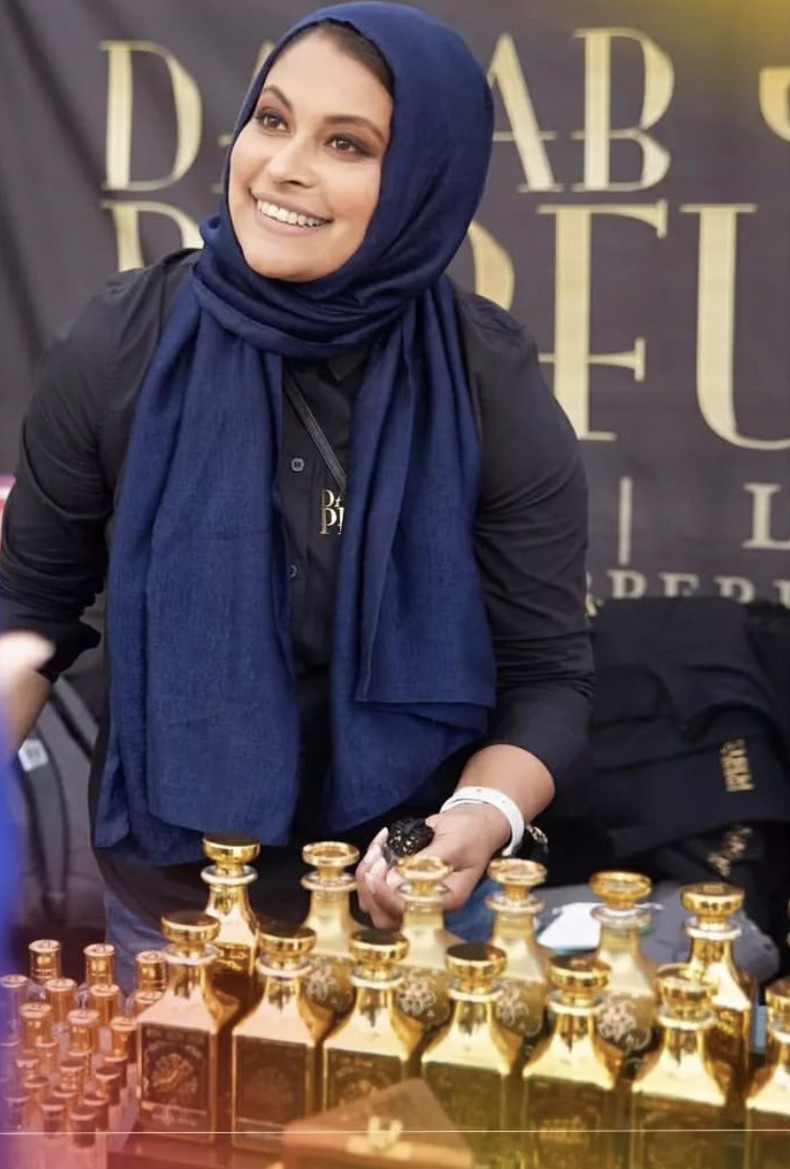
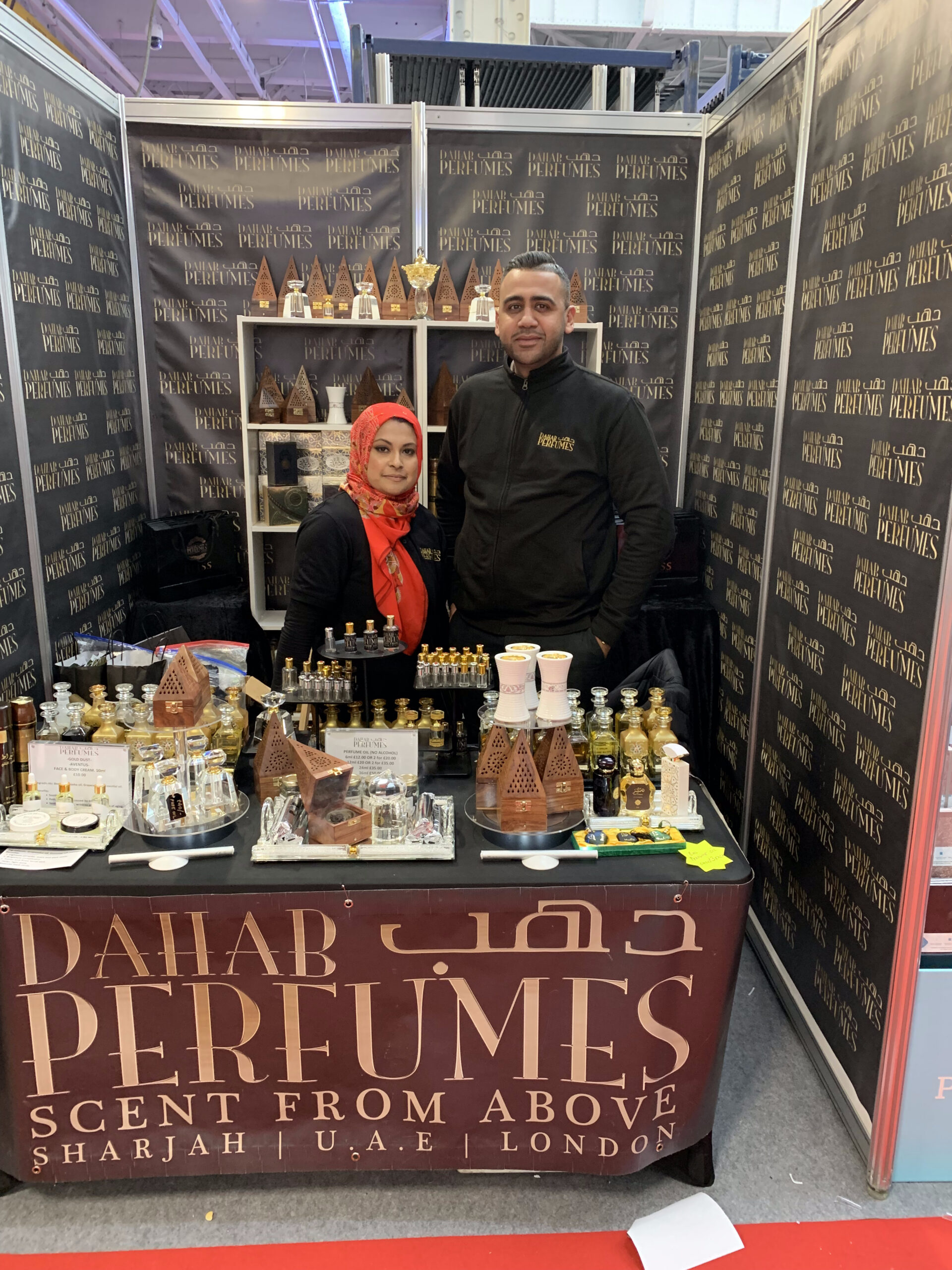
We started at markets — face to face, table by table, across the UK. No website to hide behind, no algorithm deciding who saw us. Just a conversation, a sample, and whether or not someone came back the following week. Those markets taught us more than any brand strategy could have: what people actually meant when they said they wanted something “different,” what made someone stop at a stall instead of walking past it, what turned a stranger into a regular. We built Dahab one bottle, one conversation, one returning customer at a time.
Dahab has never been a one-person story. My wife, Lila, has been fundamental to building it from the beginning. Born and raised in Britain, she studied Fashion Design, and alongside raising our three children she has built creative ventures of her own — Islamic calligraphy, a modest clothing label, a home baking business. She has run two London Marathons and trains with the same discipline she brings to everything else. Commitment. Creativity. Consistency. The belief that anything worth building takes real work, not shortcuts. That mindset runs through Dahab as much as mine does. She isn’t behind this brand — she’s part of what it’s built on.
From those early market days, Dahab grew into an online fragrance house, and eventually into a store of our own. The scale changed. The principle didn’t. Real conversations. Real customers. Real relationships. An actual understanding of what someone wants from a fragrance, built the same way it always has been — by listening.
Dahab isn’t a brand pretending to have a hundred years of history behind it. We don’t have one, and we’re not going to invent one. We’re a brand building something real, one bottle and one honest conversation at a time. Because a fragrance was never just something you wear. It’s part of how people remember you — and we’d rather earn that properly than claim it.
I was born and raised in Sharjah, in the United Arab Emirates, where fragrance was never a product on a shelf. It was oud burning before guests arrived. Bakhoor in the hallway. Perfume as the first thing you noticed about someone and the last thing you remembered. Growing up, scent wasn’t something you bought — it was how you showed respect, how you welcomed people, how you were remembered. That stayed with me long after everything else about being young in Sharjah eventually did.
In 1999, I moved to the United Kingdom as a student. Perfumery wasn’t the plan. Hospitality was.
I spent the next chapter of my career inside some of London’s most respected hotels — the Waldorf Hilton, Shangri-La at The Shard among them — in rooms built around a single idea: that luxury isn’t loud. It’s not the biggest gesture in the room. It’s the detail nobody else would have thought to get right. It’s consistency when nobody’s checking. It’s knowing exactly when to step forward and when to stay out of the way. Those years, working alongside people who treated service as a craft, are the actual foundation Dahab is built on — not a perfume tradition, a hospitality one.
I later completed a Master’s in Hospitality Management at Cornell University, which mostly confirmed what a decade in five-star hotels had already taught me: the theory only matters once you’ve lived the practice.
Fragrance never stopped being personal, even while I was building a career in hospitality. I was the person recommending scents to friends before they asked, to family before they knew what they wanted, and eventually to people who weren’t family at all. Helping someone find a fragrance that actually matched who they were — not who an advert told them to be — was never work. Dahab grew out of that, not out of a business plan. There was no investor deck, no corporate team, no five-year strategy. There were conversations.
We started at markets — face to face, table by table, across the UK. No website to hide behind, no algorithm deciding who saw us. Just a conversation, a sample, and whether or not someone came back the following week. Those markets taught us more than any brand strategy could have: what people actually meant when they said they wanted something “different,” what made someone stop at a stall instead of walking past it, what turned a stranger into a regular. We built Dahab one bottle, one conversation, one returning customer at a time.
Dahab has never been a one-person story. My wife, Lila, has been fundamental to building it from the beginning. Born and raised in Britain, she studied Fashion Design, and alongside raising our three children she has built creative ventures of her own — Islamic calligraphy, a modest clothing label, a home baking business. She has run two London Marathons and trains with the same discipline she brings to everything else. Commitment. Creativity. Consistency. The belief that anything worth building takes real work, not shortcuts. That mindset runs through Dahab as much as mine does. She isn’t behind this brand — she’s part of what it’s built on.
From those early market days, Dahab grew into an online fragrance house, and eventually into a store of our own. The scale changed. The principle didn’t. Real conversations. Real customers. Real relationships. An actual understanding of what someone wants from a fragrance, built the same way it always has been — by listening.
Dahab isn’t a brand pretending to have a hundred years of history behind it. We don’t have one, and we’re not going to invent one. We’re a brand building something real, one bottle and one honest conversation at a time. Because a fragrance was never just something you wear. It’s part of how people remember you — and we’d rather earn that properly than claim it.