Blog
Attar Explained: The Original Perfume Before Perfume Existed
Attar, or ittar, is a concentrated, alcohol-free fragrance oil that predates modern perfumery by centuries, and understanding it as its own genuine art form, rather than simply “old-fashioned perfume,” changes how you should actually wear it.
The Fundamental Difference
The fundamental difference is right in the name. Modern perfume dissolves fragrance oil into alcohol and water. Attar captures fragrance directly into a pure oil base, traditionally sandalwood oil, with no alcohol involved at all. The traditional production method, deg-bhapka, uses copper stills heated over an open fire, with fragrant steam travelling through bamboo pipes into a receiving vessel already filled with base oil. A single small batch can take over two weeks of patient, continuous work, largely centred historically around Kannauj, India’s perfume capital.
Why Attar Lasts So Differently
This concentration is exactly why attar behaves so differently from alcohol perfume. Alcohol perfume evaporates relatively quickly, giving strong initial sillage that generally fades within four to six hours. Attar, with no alcohol to evaporate, works almost the opposite way — quieter and more intimate up front, but binding directly with your skin’s natural oils to last considerably longer, sometimes well over a full day.
Rose Attar and Beyond
Rose attar, sometimes called attar gulab, is the most historically famous example, carrying a legendary Mughal court history involving Emperor Jahangir and his wife Nur Jahan. But attar as a whole is far broader than rose or oud alone — vetiver, saffron, musk, and mitti attar, a genuinely remarkable material distilled from baked earth to capture the scent of rain, are equally traditional examples of the same craft.
An Ancient Tradition
This entire tradition of hydro-distilling fragrance into oil stretches back an extraordinarily long way, with roots widely described as reaching into the ancient Indus Valley civilisation and maturing further under Mughal court patronage. The knowledge itself was rarely written down, passed instead from teacher to apprentice across generations — which makes its survival into the present day genuinely remarkable.
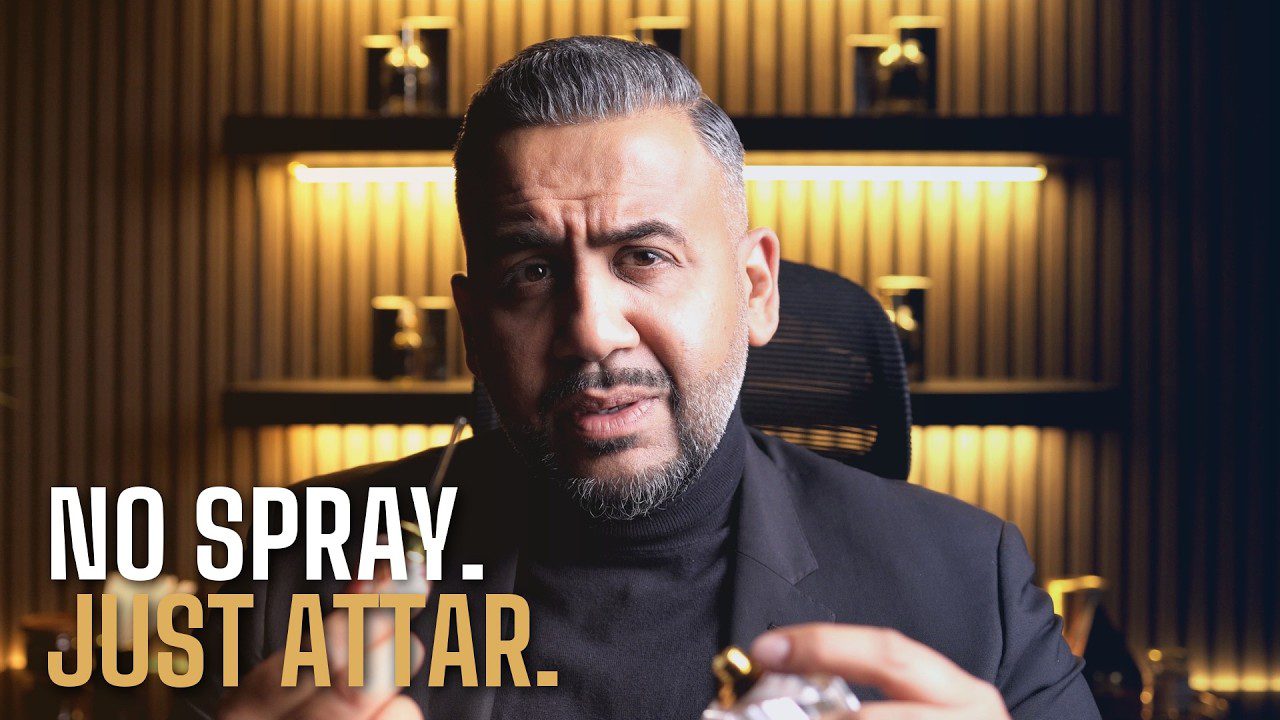
Watch the full episode of The Scent Room with Sufian below for the complete story, including practical guidance on how to actually wear attar for the first time.